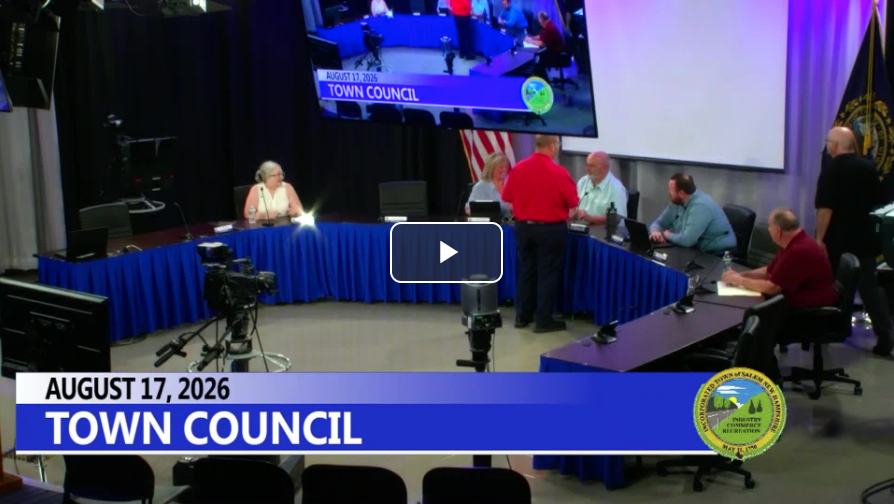
The Town has contracted with Vision Government Solutions (Vision) to conduct a 2026 townwide property revaluation. Representatives from Vision and the Town’s Assessing Department attended the Salem Town Council meeting on August 17,2026, to provide an update regarding the revaluation. At the meeting, Vision reviewed how property values were developed, the preliminary changes by property type, how the revaluation relates to property taxes, and what property owners should expect next.
An important point for property owners: An increase in assessed value does not mean that a property owner’s tax bill will increase by the same percentage.
The new tax rate has not yet been established, and the effect on individual tax bills cannot be determined until final property values and the Town’s total assessed valuation are known.
Three things to Know
- Your assessment increase is not your tax increase.
- The values being mailed are preliminary and property owners will have an opportunity to meet with Vision.
- Your actual December tax impact cannot be determined until final values, and the new tax rate are established.
What Is a Revaluation?
A revaluation is the process of reassessing all properties in a municipality to reflect current market values as of a specific date. Salem’s previous townwide revaluation was completed in 2021, meaning the assessments used for taxation purposes have generally reflected market conditions as of April 1, 2021.
The 2026 revaluation reflects market conditions as of April 1, 2026. Therefore, the preliminary changes reflect approximately five years of changes in the real estate market, rather than changes occurring in a single year.
The revaluation is intended to ensure that all properties are assessed at full and fair market value, and the assessments are equitable across property types. This allows the property tax burden to be distributed based on current property values.
How Property Values Were Developed
Vision explained that the revaluation included an in-depth review of Salem real estate market, including property sales from April 2024 through April 2026. Depending on the type of property, three generally recognized approaches to value were considered:
- The sales approach, which reviews what similar properties have sold for through valid, arm’s length transactions.
- The income approach, which considers income, expenses, market rents, vacancy rates, and capitalization rates for commercial and income producing properties.
- The cost approach, which considers current construction costs, depreciation, and land value.
The process also included inspections of properties sold within the past two years, questionnaires sent to commercial property owners requesting income and expense information, research of publicly available listings and market information, review of building permits, and field reviews intended to verify property data and promote consistency.
Vision emphasized that assessors do not create market value. Market value is determined by the interaction between buyers and sellers. Different types of properties and properties in different locations may also change in value at different rates.
Preliminary Changes by Property Type
Vision presented the following preliminary average changes:
Residential Properties
- Single family homes: 51 percent increase
- Two and three family properties: 49 percent increase
- Residential condominiums: 52 percent increase
- Manufactured housing: 53 percent increase
Commercial and Income- Producing Properties
- Apartments with four or more units: 42 percent increase
- Commercial properties: 25 percent increase
- Industrial properties: 30 percent increase
These percentages represent preliminary averages within each property category. They are no increases that are applied uniformly to every property. The actual change in an individual property’s assessed value will depend on factors including property type, size, age, condition, location, use, property characteristics, and applicable market information. Changes may also reflect improvements or additions to a property since the previous revaluation, including work completed through building permits.
What the Revaluation Means for Property Taxes
A revaluation does not, by itself, increase the total amount of property taxes the Town raises. As the Town’s total assessed valuation increases through the revaluation, the tax rate will adjust accordingly.
For this reason, property owners should not multiply their new preliminary assessment by the current tax rate to estimate their December tax bill. The current tax rate is based on the Town’s previous assessed valuation and will change.
For example, if a property’s assessed value increases by 50%, that does not mean its property tax bill will increase by 50%.
The impact on an individual property owner’s tax bill will depend in part on how the change in that property’s value compares with changes across the Town’s overall tax base. Properties that increase at a greater rate than the overall tax base may experience a greater share of the tax burden, while properties that increase at a lower rate may experience a smaller share.
The New Hampshire Department of Revenue Administration will establish Salem’s new tax rate later this fall. Until final assessments, the total Town valuation, and the new tax rate are established, the exact impact on an individual property’s tax bill cannot be determined.
Council Discussion
Town Council members asked Vision and the Assessing Department a number of questions regarding how residential, commercial, industrial, apartment, and manufactured housing values were developed.
A significant portion of the discussion focused on the difference between the preliminary average increases for residential and commercial properties.
Vision explained that commercial and income-producing properties are frequently evaluated using income-related information, including market rents, operating expenses, vacancy rates, and capitalization rates. Those market factors may change at different rates than residential sale prices. Individual commercial assessments can also vary significantly based on location, condition, use, income, and other property-specific characteristics.
The Council also discussed apartment properties, manufactured housing, properties under construction as of April 1, 2026, and the process used to determine whether individual property sales are considered valid indicators of market value.
Council members and members of the public also raised questions regarding specific properties and the preliminary differences among property categories.
Because the values presented on August 17 remain preliminary, the Town and Vision will continue reviewing the revaluation data and individual properties as the process moves toward completion.
What Property Owners Should Expect Next
Preliminary assessment notices will be mailed within the next two weeks. Once the notices are sent, each property owner will receive a letter identifying the new preliminary assessed value of their property.
The notice will include information about how to schedule an informal hearing with Vision. Hearings will be available by telephone or in person, and property owners will also be able to schedule an appointment online.
During an informal hearing, property owners may discuss their property data and how the preliminary value was determined. The hearing cannot address the amount of an owner’s future property tax bill because the new tax rate will not yet be available.
Before requesting a hearing, property owners are encouraged to:
- Consider whether the assessment reasonably represents what the property could have sold for as of April 1, 2026.
- Review sales of similar properties based on style, size, age, and neighborhood.
- Compare the assessments of similar properties.
- Review the property record card for accuracy, including square footage, bedrooms, bathrooms, and other property details.
- Request an inspection if property information is incorrect or if the property has condition issues that may affect its value.
If an inspection or further review is needed, Vision may revisit, remeasure, or inspect the property before finalizing the value.
Following the informal hearing process, property owners will receive an additional notice confirming whether their assessment remained the same or was changed. That notice will also include information about the formal appeal and abatement process.
Final values are expected to be completed by the end of September. The new tax rate will be established later this fall, and the new assessments will be used for the December 2026 property tax bills.
Property owners who may qualify for available exemptions or credits may apply after receiving their final tax bill. The deadline to file for an abatement is March 1.
Next Town Council Meetings
The agenda and meeting materials are available on the Town’s website. Town Council meeting recordings are available through Salem Community Television.
The next Town Council meetings are scheduled for September 14 and September 28, 2026.