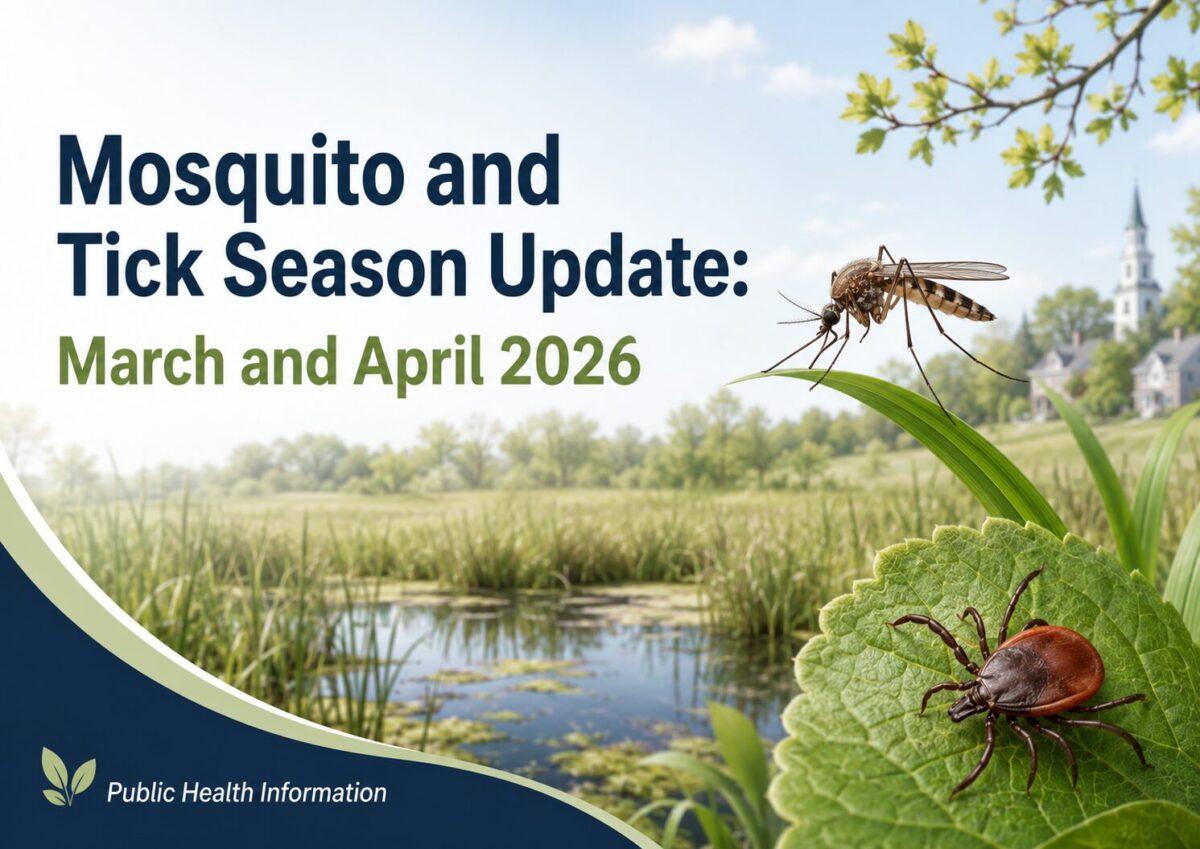
The Town of Salem has received the March and April 2026 update from Dragon Mosquito Control, which includes information on current mosquito and tick activity in New Hampshire.
Although this past winter brought significant snow, drought conditions remain in place. April rainfall has helped, but it has not been enough to fully eliminate the drought. Despite the dry conditions, stagnant water remains present in wetlands, creating areas where mosquito larvae can continue to develop.
According to the Dragon Mosquito Control report, spring mosquitoes in New Hampshire can transmit Jamestown Canyon Virus as early as mid-May. While rare, Jamestown Canyon Virus is considered a serious illness. Since 2013, New Hampshire has confirmed 26 human cases, including one death. During the 2025 season, 16 mosquito batches tested positive for Jamestown Canyon Virus, and one human case was reported.
Mosquitoes typically begin hatching in May, while ticks are already active. Deer ticks continue to be the primary tick-related concern in New Hampshire. However, Lone Star ticks are also presenting a growing risk as they expand into northern areas.
One concern associated with the Lone Star tick is Alpha-gal Syndrome, a food allergy that can develop after a tick bite. This condition occurs when the tick bite introduces the alpha-gal molecule into the body, which may trigger an allergy to foods such as beef, pork, lamb, venison, goat, milk, cheese, and ice cream.
Reactions may occur quickly or may be delayed by 2 to 10 hours after eating. Symptoms can include hives or an itchy rash, heartburn, indigestion, severe stomach pain, nausea, vomiting, diarrhea, a drop in blood pressure, dizziness, coughing, wheezing, shortness of breath, difficulty breathing, anaphylaxis, or swelling of the lips, throat, tongue, or eyelids.
Alpha-gal Syndrome is considered underdiagnosed in New Hampshire. As tick populations, including the Lone Star tick, continue to expand, cases are increasing. Delayed and variable symptoms, combined with limited awareness, may lead to missed or delayed diagnoses. Beginning April 1, 2026, the New Hampshire Department of Public Health began requiring the reporting of this tick-borne allergy.
Residents are encouraged to stay informed and take precautions as mosquito and tick activity increases.
For future mosquito and tick updates, please visit the Town’s website, where new updates will be posted as they become available.
To read the full Dragon Mosquito Control March and April 2026 Update Report, please click here.