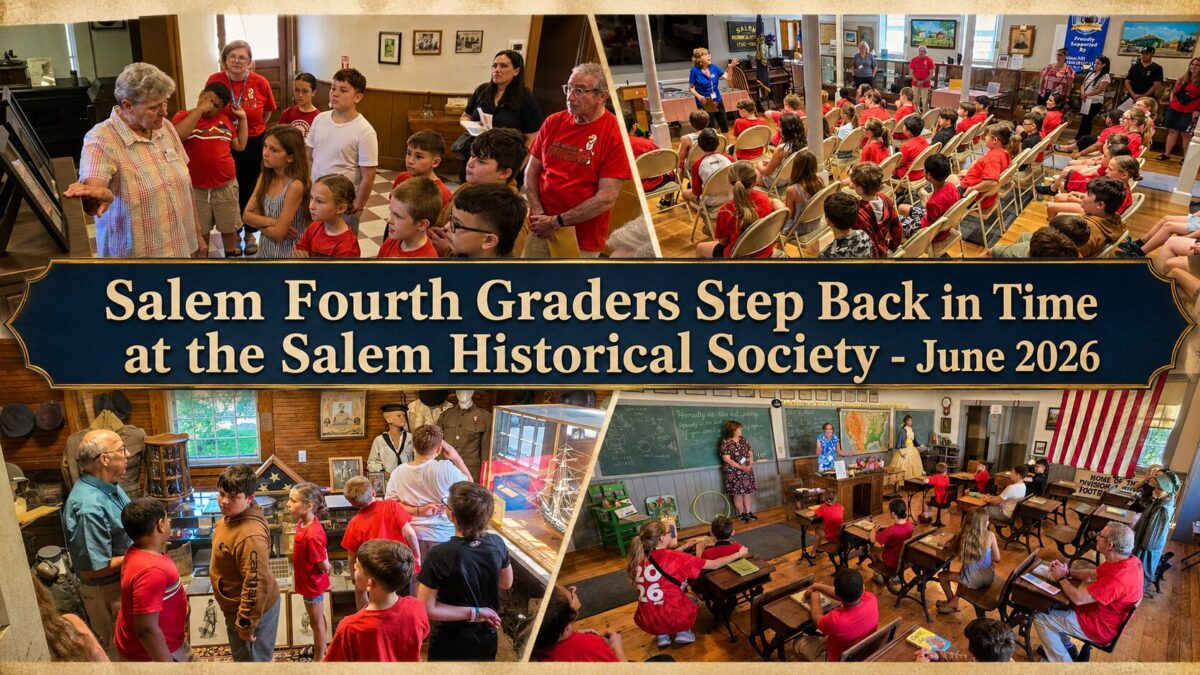
For Salem fourth graders, history recently came alive beyond the pages of a textbook.
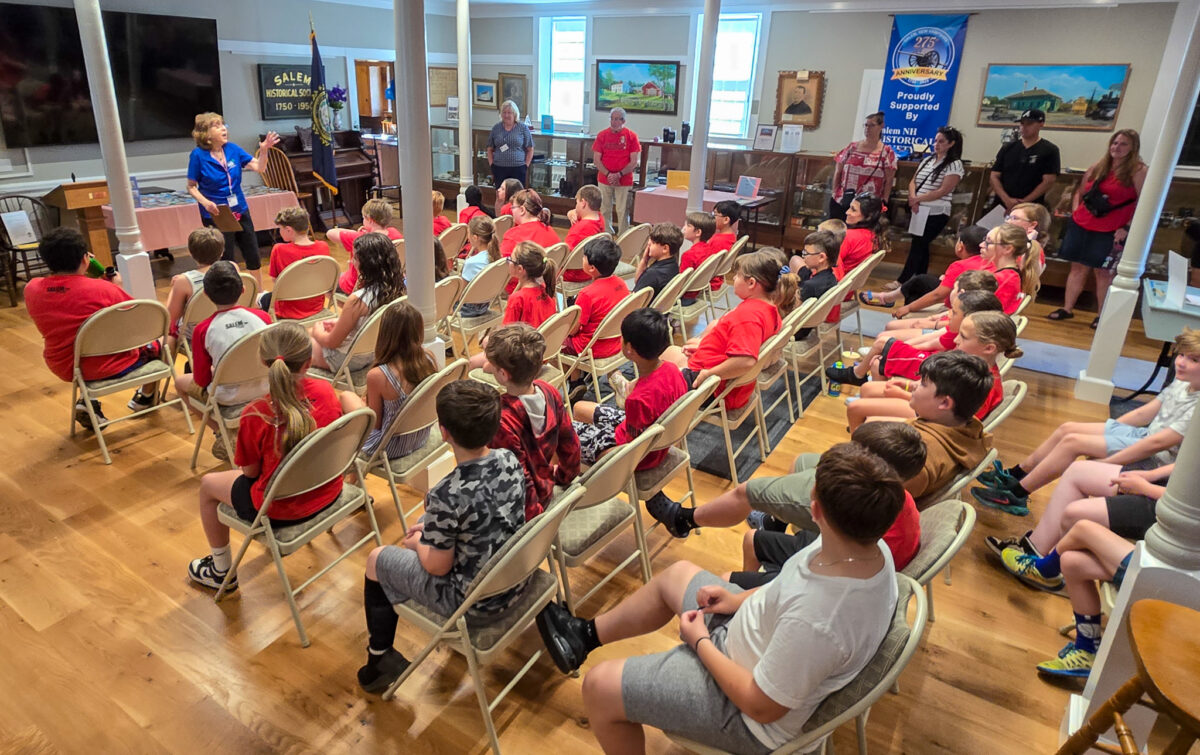
Throughout May and June, students from Soule, Barron, and Fisk Schools visited the Salem Historical Society Museum, where they took part in an interactive journey through more than 250 years of local history. During their visits, students explored Salem’s past in agriculture, industry, education, entertainment, and technology while learning how earlier generations lived, worked, and learned.
With just a three-hour window from the time they left school until they returned to class, students toured the two floors of the historic Old Town Hall, the Alice Hall Memorial Library, and Schoolhouse No. 5. Some groups also visited the Center Burying Ground, where they viewed the grave of Reverend Abner Bayley, who served Salem’s early parish for more than 50 years.
At each stop, students brought enthusiasm and curiosity, asking thoughtful questions and making connections between life in the past and their own experiences today.
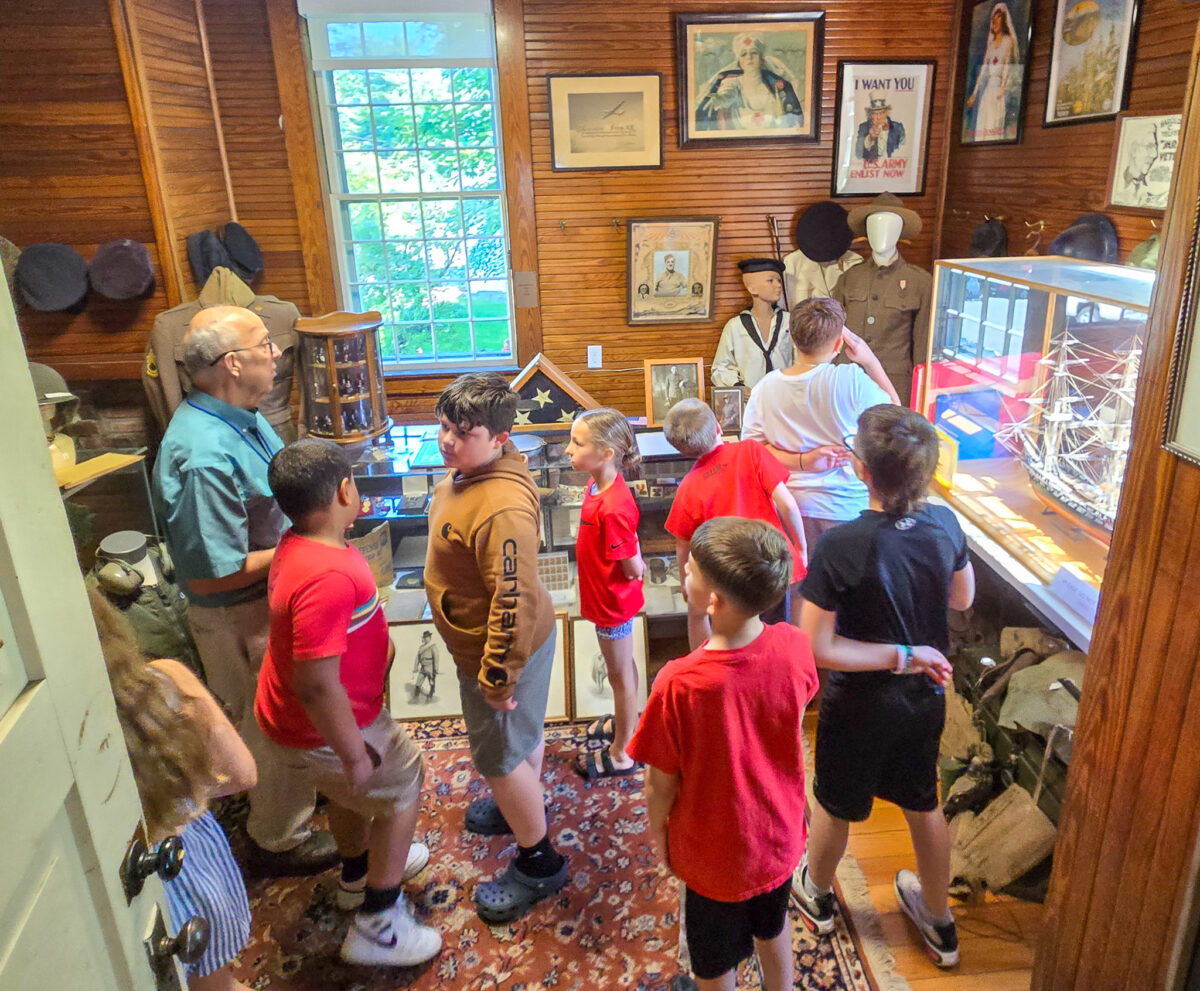
Inside Old Town Hall, students discovered displays of antique eyeglasses, Native American artifacts, vintage toys, and memorabilia from Canobie Lake Park. Upstairs, the Military Room, historic pulpit, and antique household appliances sparked lively discussions. Many students were especially interested to learn that the second floor once served as a gathering place for community celebrations, dances, and public meetings.
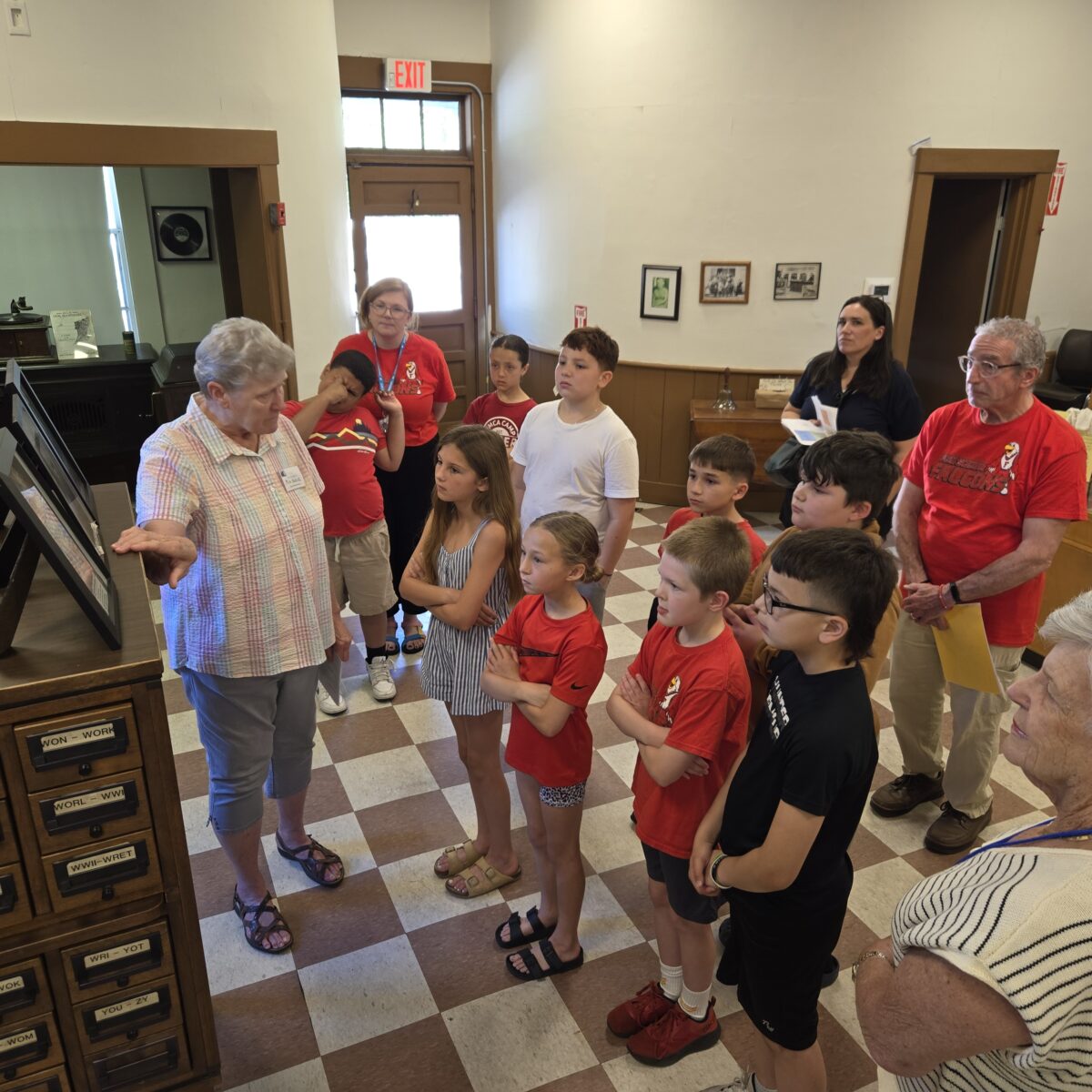
At the Alice Hall Memorial Library, students learned how research was conducted before the digital age. Many were surprised to find out that books were once located through card catalogs instead of computers. They also learned about Alice Hall, Salem’s librarian for more than four decades, whose dedication helped shape the town’s public library services. Students also had the chance to examine the library’s coin collection and hear the sounds of a player piano, offering a memorable glimpse into entertainment from another era.
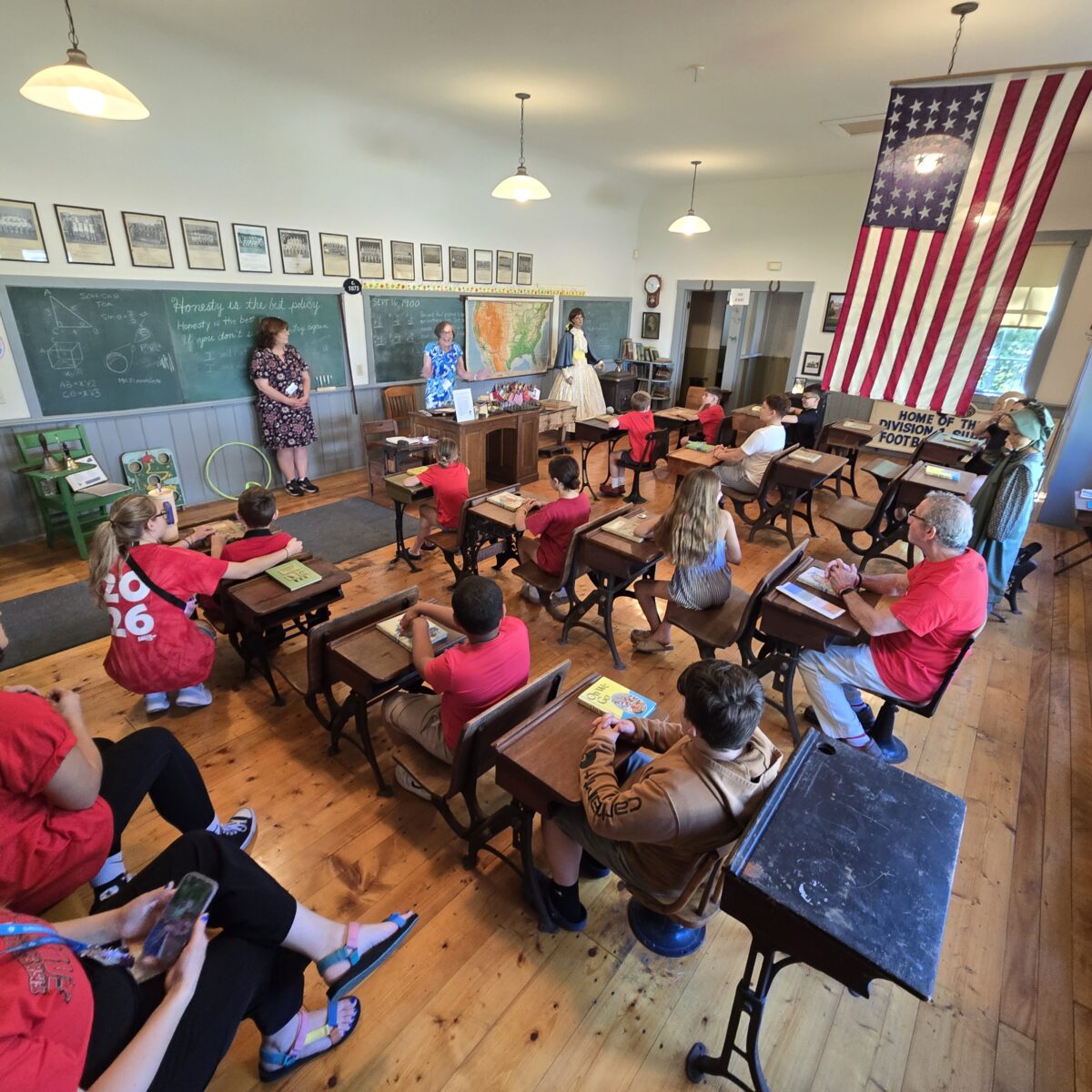
For many students, the highlight of the visit was Schoolhouse No. 5. Inside the one-room schoolhouse, they experienced what education was like from the late 1800s through the mid-1900s. Students sat at desks of different sizes, counted the 37 stars on an 1873 American flag, and wrote on the chalkboard as they imagined what school was like for children generations ago.
Their questions showed genuine interest in the daily lives of students from the past. One student asked why learning cursive was once considered so important, which opened a discussion about letter writing, record keeping, and communication before computers and digital technology.
The Salem Historical Society expressed its appreciation to the teachers, chaperones, and volunteers who helped make the visits possible. Most importantly, the Society hopes these experiences inspire Salem’s young people to continue exploring and preserving the rich history of their community for years to come.